support@meisterdrucke.com  ·  0043 4257 29415

Deutsch English Italiano Español Français Nederlands Português Svenska Polski Dansk
Search by artist, work title or style – e.g. Monet, Starry Night, Impressionism, Hokusai wave, nude. Describe the scene – e.g. green meadow, abstract with lots of red, dark oil painting, standing nude next to a tree.

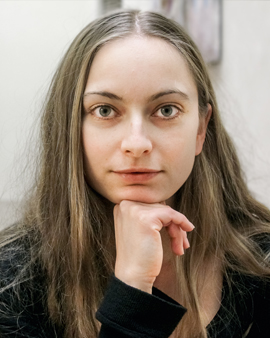
Feel the passion of Magdalena Cichon in our art prints.

Our art reproductions bring moments of comfort and joy right into your home.


Discover artworks now!
Österreichische Kunstmanufaktur Erfahrungen & Bewertungen zu Meisterdrucke auf ProvenExpert.com

Feel the passion of Magdalena Cichon in our art prints.

Our art reproductions bring moments of comfort and joy right into your home.

Discover artworks now!
Magdalena Cichon
Passionate Customer Service
Museum Quality Art Prints
Individual Customization Options
Österreichische Kunstmanufaktur Passionate Customer Service
Museum Quality Art Prints
Individual Customization Options
Magdalena Cichon

Magdalena Cichon

    1987
Contemporary Arts

Preferably in large formats, figurative scenes in the broadest sense of the word, including depictions of animals and landscapes, stand before us. The motifs appear and elude us. The moment when a scene could be named hardly ever occurs - instead transitions, overlaps, interspersed with patches of colour, geometric elements, drawings, micro-images. Broken colours, in parts even aggressively luminous again, predominantly acrylic, but supplemented by other material components. Glazing, thinned, viscous, forming lumps in some places. Graphic elements made of chalk, charcoal and other drawing pens.
After the overall view, one approaches a canvas and discovers a complicated structure of layers, which make the front and back, the above and below only temporarily visible. Immediately next to it, another finding is revealed. In this respect, painting actually bears the main characteristics of gestural-informal art, but even this is not the final finding. In this conglomerate of formal expressions of the most diverse nature, figures are repeatedly interwoven, clearly linearly outlined, rarely complete, often as fragments, because they too are part of this flowing, exploratory, interwoven cosmos of forms. Individual parts of the body are modelled in the manner of the Old Masters and then merge with this painterly relief into non-representational formal landscapes. But like a basic motif that is always making itself heard again, the most precise drawings prevail against these seemingly uncontrolled eruptions of form, clear and distinct outlines that evoke associations with the powerful and virtuoso figure concepts of the late Renaissance and Mannerism, but immediately become blurred again.
This is a fundamental principle of Magdalena Cichon's creative method. She does not offer herself or the viewer any final formulations. New constellations between colour, form and structure are constantly appearing. As viewers, we very quickly become aware that we have no claim to reliable recognition or a clear reading. Magdalena Cichon also starts from the unpredictable and unexpected in her work. Her strategy is based on the potential of the accidental and on her planned interventions, her pictorial answers to these guidelines. It is the field of tension between chance and intention from which her pictures draw their power. Magdalena Cichon does not draw the form and outline of bodies according to a model, but has internalized these anatomical formulas through long study, so that they have become the pictorial idea, the fundus of form, which then, always giving in to chance, breaks new ground in the act of painting. She describes this as a process that takes place "out of the hand", "without a detour over the head", which she herself observes like an outsider, only to react at a decisive moment to this product of artistic experience and unconscious action.

André Breton understood the activity of the artist less as inventing and imagining than as finding, triggering and exposing, and derived from this as an artistic ideal a "psychic automatism", admittedly in the assumption that he could thus trace the "real" course of thought without any control of reason. The goal of surrealism was to be able to depict an unrestricted totality of reality. This was, of course, a utopia: the communication always remains a fragment of a whole, part of the great continuum, for it is inevitably isolation, selection from an all-embracing context.
Magdalena Cichon does not even succumb to this illusion. She is fully aware of this limitation, this condition and makes it her method - because reflection is an essential characteristic of her work.

www.magdalena-cichon.de
Text: Angelika Steinmetz-Oppelland, 2017

Magdalena Cichon

    1987
Contemporary Arts Magdalena Cichon

Preferably in large formats, figurative scenes in the broadest sense of the word, including depictions of animals and landscapes, stand before us. The motifs appear and elude us. The moment when a scene could be named hardly ever occurs - instead transitions, overlaps, interspersed with patches of colour, geometric elements, drawings, micro-images. Broken colours, in parts even aggressively luminous again, predominantly acrylic, but supplemented by other material components. Glazing, thinned, viscous, forming lumps in some places. Graphic elements made of chalk, charcoal and other drawing pens.
After the overall view, one approaches a canvas and discovers a complicated structure of layers, which make the front and back, the above and below only temporarily visible. Immediately next to it, another finding is revealed. In this respect, painting actually bears the main characteristics of gestural-informal art, but even this is not the final finding. In this conglomerate of formal expressions of the most diverse nature, figures are repeatedly interwoven, clearly linearly outlined, rarely complete, often as fragments, because they too are part of this flowing, exploratory, interwoven cosmos of forms. Individual parts of the body are modelled in the manner of the Old Masters and then merge with this painterly relief into non-representational formal landscapes. But like a basic motif that is always making itself heard again, the most precise drawings prevail against these seemingly uncontrolled eruptions of form, clear and distinct outlines that evoke associations with the powerful and virtuoso figure concepts of the late Renaissance and Mannerism, but immediately become blurred again.
This is a fundamental principle of Magdalena Cichon's creative method. She does not offer herself or the viewer any final formulations. New constellations between colour, form and structure are constantly appearing. As viewers, we very quickly become aware that we have no claim to reliable recognition or a clear reading. Magdalena Cichon also starts from the unpredictable and unexpected in her work. Her strategy is based on the potential of the accidental and on her planned interventions, her pictorial answers to these guidelines. It is the field of tension between chance and intention from which her pictures draw their power. Magdalena Cichon does not draw the form and outline of bodies according to a model, but has internalized these anatomical formulas through long study, so that they have become the pictorial idea, the fundus of form, which then, always giving in to chance, breaks new ground in the act of painting. She describes this as a process that takes place "out of the hand", "without a detour over the head", which she herself observes like an outsider, only to react at a decisive moment to this product of artistic experience and unconscious action.

André Breton understood the activity of the artist less as inventing and imagining than as finding, triggering and exposing, and derived from this as an artistic ideal a "psychic automatism", admittedly in the assumption that he could thus trace the "real" course of thought without any control of reason. The goal of surrealism was to be able to depict an unrestricted totality of reality. This was, of course, a utopia: the communication always remains a fragment of a whole, part of the great continuum, for it is inevitably isolation, selection from an all-embracing context.
Magdalena Cichon does not even succumb to this illusion. She is fully aware of this limitation, this condition and makes it her method - because reflection is an essential characteristic of her work.

www.magdalena-cichon.de
Text: Angelika Steinmetz-Oppelland, 2017

Artworks by Magdalena Cichon

Artworks by Magdalena Cichon

27 artworks found
Sort by

Filter settings

Display settings
27 artworks found

Magdalena Cichon
G. (o.T.)
2018 | oil on canvas

Choose picture

Magdalena Cichon
 
2014 | Acrylic

Choose picture

Magdalena Cichon
Apfelbaum
2016 | acrylic on canvas

Choose picture

Magdalena Cichon
 
2016 | Acrylic

Choose picture
Magdalena Cichon
Choose picture


Magdalena Cichon
 
2016 | acrylic on canvas

Choose picture
Magdalena Cichon
Choose picture


Magdalena Cichon
 
2012 | Acrylic

Choose picture

Magdalena Cichon
Löwe
2016 | Acrylic

Choose picture
Magdalena Cichon
Choose picture


Magdalena Cichon
 
2013 | mixed media

Choose picture

Magdalena Cichon
 
2011 | Acrylic

Choose picture

Magdalena Cichon
 
2010 | mixed media

Choose picture

Magdalena Cichon
Roland und Ulrich
2012 | Acrylic

Choose picture

Magdalena Cichon
Mangroven
2016 | acrylic on canvas

Choose picture

Magdalena Cichon
 
2011 | Acrylic

Choose picture
Magdalena Cichon
Choose picture


Magdalena Cichon
 
2016 | Mixed media on canvas

Choose picture
Magdalena Cichon
Choose picture


Magdalena Cichon
 
2017 | Acrylic

Choose picture
Magdalena Cichon
Choose picture


Magdalena Cichon
 
2013 | Acrylic

Choose picture
Magdalena Cichon
Choose picture


Magdalena Cichon
 
2015 | Acrylic

Choose picture

Magdalena Cichon
 
2013 | Acrylic

Choose picture

Magdalena Cichon
 
2013 | Acrylic

Choose picture

Magdalena Cichon
 
2016 | Acrylic

Choose picture

Magdalena Cichon
Fichten
2016 | acrylic on canvas

Choose picture
Magdalena Cichon
Choose picture


Magdalena Cichon
 
2014 | mixed media

Choose picture
Magdalena Cichon
Choose picture


Magdalena Cichon
 
2015 | Acrylic

Choose picture
Magdalena Cichon
Choose picture


Magdalena Cichon
 
2018 | Acrylic

Choose picture

Magdalena Cichon
 
2014 | mixed media

Choose picture
Magdalena Cichon
Choose picture


Magdalena Cichon
 
2014 | mixed media

Choose picture
Magdalena Cichon
Choose picture


Magdalena Cichon
 
2010 | Acrylic

Choose picture
Magdalena Cichon
Choose picture


Page 1 / 1


What our customers think about us


Frequently Asked Questions about Meisterdrucke


Personalizing your art print at Meisterdrucke is simple and intuitive: Choose a frame, set the image size, pick a printing medium, and add suitable glazing or a stretcher frame. We also offer additional customization options like mats, fillets, and spacers. If you have any questions, our customer service team is ready to help you create your perfect artwork.

At Meisterdrucke, you can visualize your configured artwork directly in your own room. Simply upload a photo of your space and see how the artwork looks in it. If you're visiting us on a mobile device — phone or tablet — our augmented reality feature brings the picture to life and projects it right into your room. A unique experience that combines art and technology.

Choosing the right medium is often a matter of personal taste. To give you a better idea, we've provided some images for each medium. We also offer a sample set of all paper variants, so you can decide not just visually but by touch as well. You can order the sample set free of charge — only shipping costs apply.

Don't worry! At Meisterdrucke, we don't just process orders mechanically. Every order is manually reviewed by our team. If we spot any inconsistencies or issues with your configuration, we'll get in touch with you right away. And of course, our friendly and patient support team is always here to help you with your configuration. We'll work with you by phone or email to adjust your image so the final result is exactly what you had in mind.


Still have questions?

Are you interested in an art print from our manufactory but still unsure? Do you need advice on choosing the medium or help with the order?

Our experts are happy to assist you.

+43 4257 29415
support@meisterdrucke.com
Mo-Do: 7:00 - 16:00 | Fr: 7:00 - 13:00

Still have questions?

Are you interested in an art print from our manufactory but still unsure? Do you need advice on choosing the medium or help with the order?

Our experts are happy to assist you.

+43 4257 29415
support@meisterdrucke.com
Mo-Do: 7:00 - 16:00 | Fr: 7:00 - 13:00


Meisterdrucke

   Kärntner Strasse 46
        9586 Finkenstein am Faaker See
        Austria
        +43 4257 29415
        support@meisterdrucke.com
Other languages

                   
Erfahrungen & Bewertungen zu Meisterdrucke
Post.at DHL Express Quehenberger Cargoboard
Kaiser Franz Joseph

Meisterdrucke
Kärntner Strasse 46
9586 Finkenstein am Faaker See · Austria
+43 4257 29415 · office@meisterdrucke.com
Post.at DHL Express Quehenberger Cargoboard


(c) 2026 meisterdrucke.ie