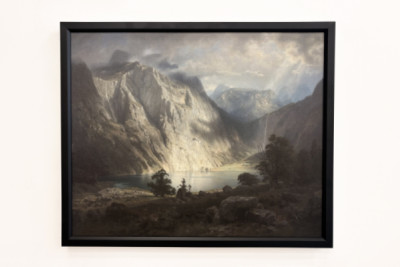
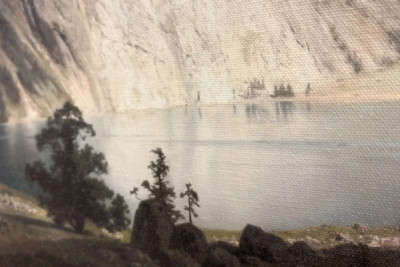
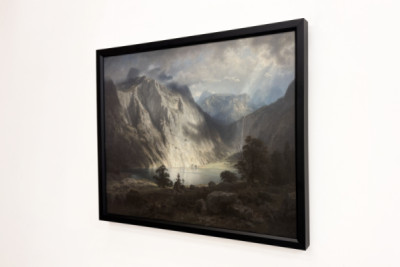
Between dark mountain slopes, the view opens out onto a bright expanse of water that leads deep into the valley basin. In the foreground lie rocks, low vegetation and scattered trees, almost in shadow; behind them, on the left, a steep cliff rises, with sunlight sweeping across its grey sections. On the right, a narrow stream cascades down from the heights, whilst clouds and mist reveal only parts of the more distant peaks. August Wilhelm Leu arranges the Obersee as a succession of distinct spatial planes: from the heavy foreground, through the tranquil blue-green of the lake, to the brightened sky. The result is not merely a mountain view, but an interplay of confinement and expansiveness. The landscape appears vast, yet not forbidding; what remains most vividly in my mind are the tiny clusters of trees on the shore, which lend the whole scene a human scale.
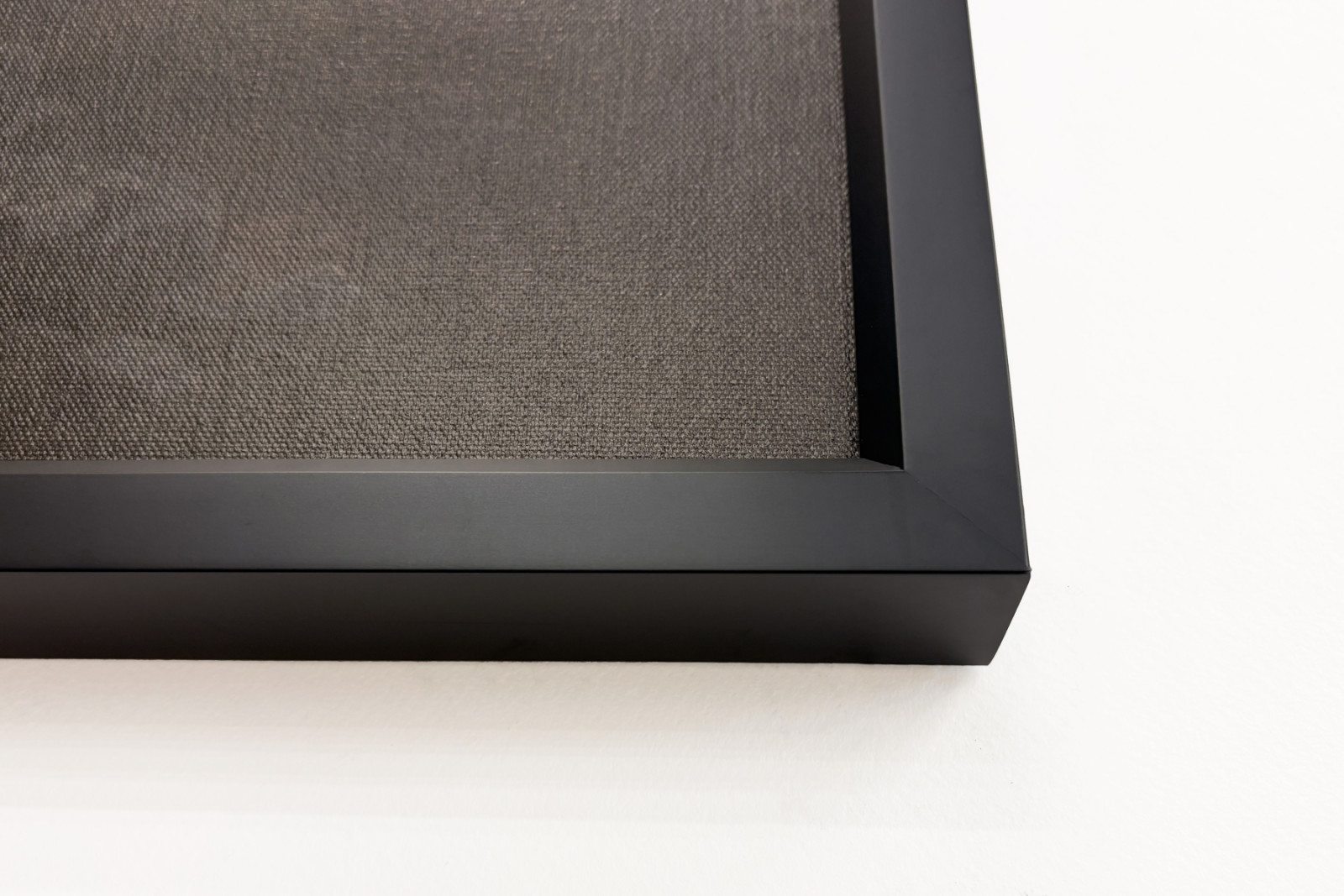
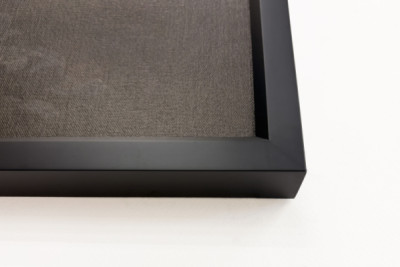
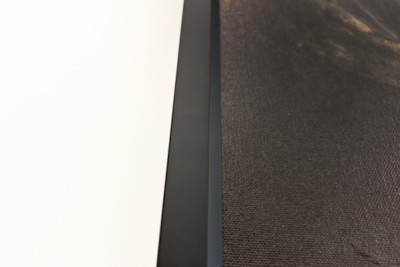
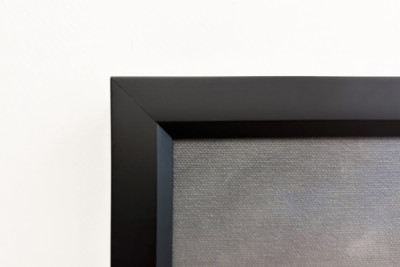
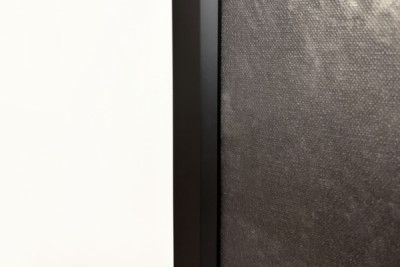
When hung, it becomes clear why the satin-finished canvas suits this reproduction of Leonardo’s work. Its surface responds to its setting: viewed head-on, the dark areas remain deep and calm, whilst from the side a soft sheen glides across the light-coloured rock face and the water. Particularly where the lake glistens beneath the mountain face, the sheen does not sit on the subject as a harsh reflection, but follows the natural path of the light. As a result, individual sections of the cloudy sky appear almost silvery. As there is no glass, no additional reflective surface obstructs the view of the print. Trina frames the 58 x 47 cm image with a black moulding; its surfaces appear predominantly matt, with light tracing narrow lines only along the bevelled edges. As the viewing angle changes, the sky shifts first, then the lake - whilst the dark foreground remains comparatively constant.
This shifting brightness makes Leu’s mountain world appear astonishingly present in the room. As the work’s details do not specify the exact moment of its creation, the view remains free from any biographical context - and this is precisely what suits a landscape that speaks entirely through light, distance and terrain.
 ×
×





 +43 4257 29415
 support@meisterdrucke.com
 Mo-Do: 7:00 - 16:00 | Fr: 7:00 - 13:00