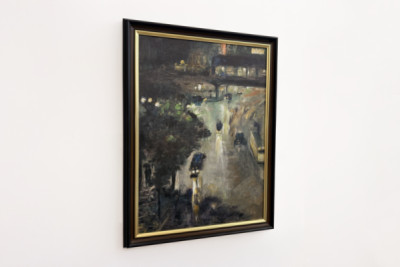
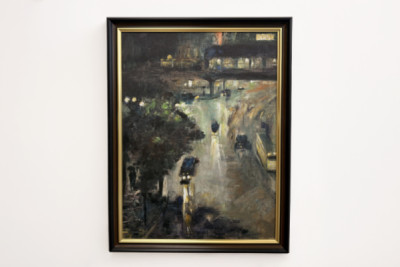
A wide, rain-soaked road draws the eye from the bottom edge of the picture deep into Nollendorfplatz, whilst dark treetops on the left and the horizontally oriented architecture in the upper third frame the space. From an elevated vantage point, vehicles and passers-by appear merely as fleeting figures in the night-time traffic. Two bright headlights approach from the darkness; other cars fade away amidst trails of grey-green, yellow and bluish light. The reflections blur on the tarmac; building façades, shop windows and street lighting almost dissolve in short brushstrokes. It is precisely this blurriness that makes the city believable: Berlin does not stand still here, but continues to move amidst the rain, noise and electric light. Lesser Ury is one of the defining painters of Berlin Impressionism. Time and again, he turns his gaze to city streets, cafés and squares at night, though he is less interested in the precise topography than in the changing light. At Nollendorfplatz, too, he transforms modern traffic into a tapestry of light and shadow. Dark brown areas lend weight to the scene, whilst small accents of green, ochre and white keep it open. At first glance, the street appears almost deserted; only gradually do individual figures emerge on the left beneath the trees. This creates that distinctive blend of intimacy and anonymity that characterises Ury’s depictions of Berlin: one looks upon an everyday moment whilst simultaneously sensing how quickly it passes.
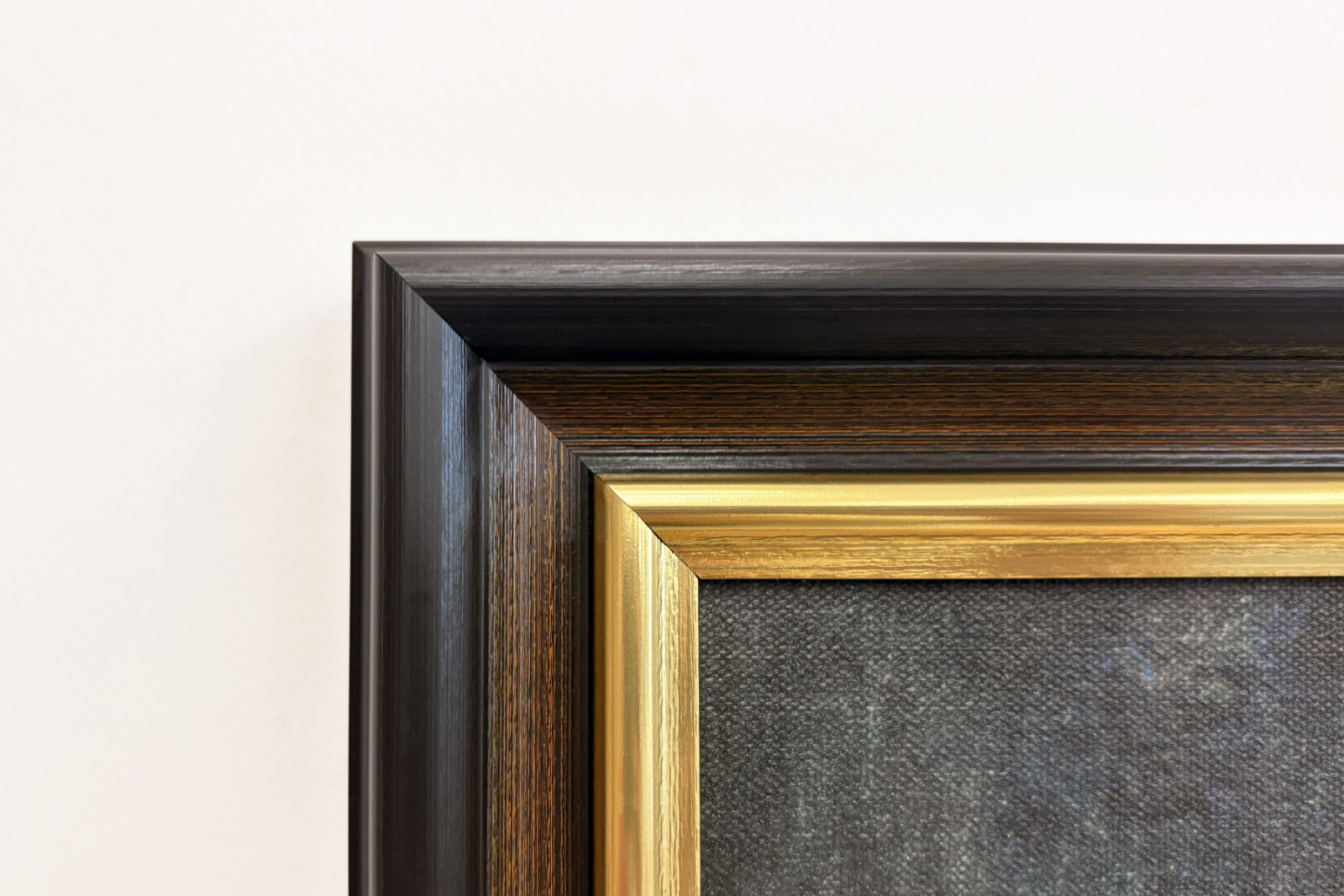
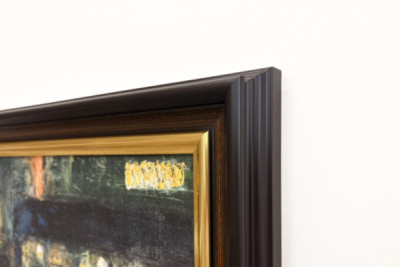
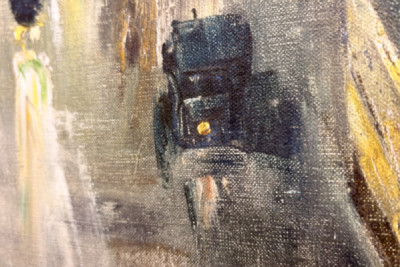
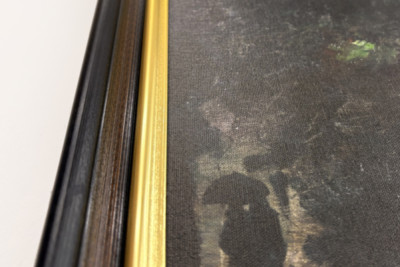
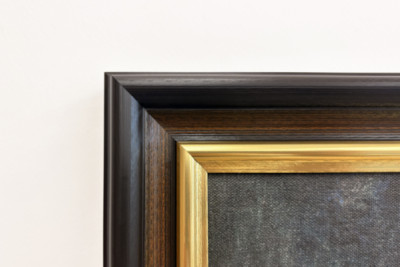
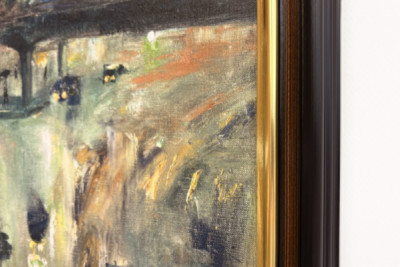
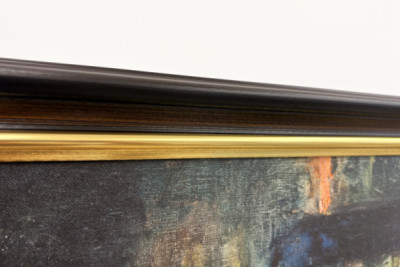
Hanging on the wall, this portrait in portrait format (48 × 65 cm) captures the subdued evening atmosphere very directly. Leonardo, the satin-finished canvas, allows a subtle shimmer to dance across the dark areas without turning them into a solid reflection. One’s gaze lingers on the black car to the right of the centre of the road: tiny points of light are scattered around the bodywork, whilst the yellow headlamp remains a compact glow. If one turns the picture slightly towards the room light, the grey road surface brightens first; the deeper areas beneath the trees react later and retain their blackness for longer. No glass separates the view from the surface, so no harsh rectangular reflections appear in front of the subject. Instead, the light follows the printed brushstrokes and alternates in places between matt and silky patches. Complete mattness would have detracted from the subject - Ury’s wet asphalt needs precisely this slight flicker. Lychorida frames the canvas with a black outer edge, a light-brown moulding and a narrow gold border. Here, too, the light remains in motion: viewed from the side, the gold darkens to ochre; from the front, it appears as a bright line; and immediately beside it, on the road surface, the elongated yellow reflection glimmers beneath the vehicle in the foreground.
 ×
×






 +43 4257 29415
 support@meisterdrucke.com
 Mo-Do: 7:00 - 16:00 | Fr: 7:00 - 13:00