A whiff of pampas dust, the shimmering heat over endless plains, the pulsating life of Buenos Aires - Argentina's art is like a tango: full of passion, melancholy and surprising twists and turns. Anyone who immerses themselves in the visual worlds of this country immediately senses that the search for identity, migration and the interplay between tradition and modernity are central themes here. Argentinean artists are always asking the big questions: Who are we Where do we come from And how can the inexpressible be captured in colour, line and light
Imagine you are standing in front of a painting by Xul Solar, whose watercolours and gouaches look like maps of an inner world. His works are not mere illustrations, but visions - permeated by fantasy languages, mystical symbols and vibrant colours reminiscent of the magic of the Argentinian landscape. Solar, a friend of Borges, was a crossover artist between disciplines, and his art is a symbol of the openness and joy of experimentation that characterises many Argentinian artists. In Buenos Aires, this vibrant metropolis, a scene emerged that was never satisfied with the status quo: Artists such as Antonio Berni turned to printmaking to visualise the social realities of the "descamisados", the ordinary people. His collages and woodcuts are like ripped open windows into Argentinian society - raw, direct, full of empathy.
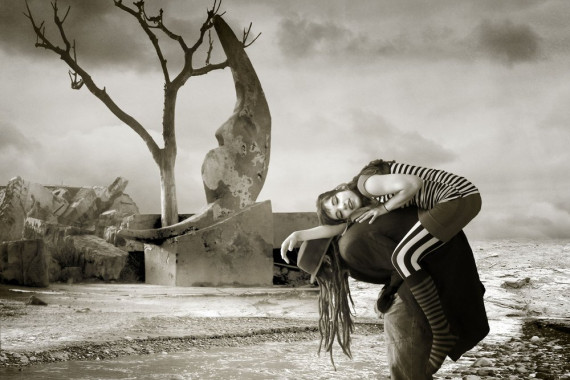
But Argentina would not be Argentina without its ability to unite opposites. While some experimented in the tradition of the European avant-garde, others searched for their own distinctive visual language. Photography became a powerful tool: Grete Stern, an artist who had emigrated from Germany, created haunting images of female dreams and fears with her surreal photomontages for the magazine "Idilio" - a feminist bang in an art world dominated by men. And then there is the subtle power of drawing: León Ferrari, for example, used fine lines to denounce political oppression and religious fanaticism; his works are silent cries that get under your skin.
What makes Argentinian art so unique is its constant oscillation between light and shadow, between hope and doubt. Raquel Forner's paintings, for example, characterised by the horrors of war, are a single outcry against oblivion - her oil paintings are like troubled skies that reflect the collective trauma. And yet there are always flashes of humour, irony, a twinkle in the eye that gives hope even in the darkest moments. Argentinian art is a kaleidoscope: it reflects the diversity of a country that never stands still, that is constantly reinventing itself - and that reveals its soul in every brushstroke, every photograph, every sketch. Anyone who engages with this art will not only discover Argentina, but also a piece of themselves.
A whiff of pampas dust, the shimmering heat over endless plains, the pulsating life of Buenos Aires - Argentina's art is like a tango: full of passion, melancholy and surprising twists and turns. Anyone who immerses themselves in the visual worlds of this country immediately senses that the search for identity, migration and the interplay between tradition and modernity are central themes here. Argentinean artists are always asking the big questions: Who are we Where do we come from And how can the inexpressible be captured in colour, line and light
Imagine you are standing in front of a painting by Xul Solar, whose watercolours and gouaches look like maps of an inner world. His works are not mere illustrations, but visions - permeated by fantasy languages, mystical symbols and vibrant colours reminiscent of the magic of the Argentinian landscape. Solar, a friend of Borges, was a crossover artist between disciplines, and his art is a symbol of the openness and joy of experimentation that characterises many Argentinian artists. In Buenos Aires, this vibrant metropolis, a scene emerged that was never satisfied with the status quo: Artists such as Antonio Berni turned to printmaking to visualise the social realities of the "descamisados", the ordinary people. His collages and woodcuts are like ripped open windows into Argentinian society - raw, direct, full of empathy.
But Argentina would not be Argentina without its ability to unite opposites. While some experimented in the tradition of the European avant-garde, others searched for their own distinctive visual language. Photography became a powerful tool: Grete Stern, an artist who had emigrated from Germany, created haunting images of female dreams and fears with her surreal photomontages for the magazine "Idilio" - a feminist bang in an art world dominated by men. And then there is the subtle power of drawing: León Ferrari, for example, used fine lines to denounce political oppression and religious fanaticism; his works are silent cries that get under your skin.
What makes Argentinian art so unique is its constant oscillation between light and shadow, between hope and doubt. Raquel Forner's paintings, for example, characterised by the horrors of war, are a single outcry against oblivion - her oil paintings are like troubled skies that reflect the collective trauma. And yet there are always flashes of humour, irony, a twinkle in the eye that gives hope even in the darkest moments. Argentinian art is a kaleidoscope: it reflects the diversity of a country that never stands still, that is constantly reinventing itself - and that reveals its soul in every brushstroke, every photograph, every sketch. Anyone who engages with this art will not only discover Argentina, but also a piece of themselves.
 ×
×







 Passionate Customer Service

 +43 4257 29415
 support@meisterdrucke.com
 Mo-Do: 7:00 - 16:00 | Fr: 7:00 - 13:00