As many requirements a medieval court painter had to meet - in addition to making portraits, these included designing items of clothing or painting signs - there was often little room for creative artistic development according to his own ideas. Portraits of rulers always had to be advantageous, and wall paintings dealt with a narrowly defined subject area, especially religious motifs. Jan van Eyck, who worked at the court of Philip III of Burgundy from 1425, was also faced with these limitations.
Van Eyck, however, used his position at court to further develop his art and he became one of the most important representatives of Old Dutch painting. He knew how to lend his works a naturalistic, lively atmosphere, which ensured that the illustrations were more realistic than was previously known from art. To achieve this, van Eyck experimented a lot with colours and techniques. It was he who made oil painting popular. The more intense colours of his works also contributed to the fact that the viewer was able to get a closer look at the work of art and that he was sometimes called the "king of painters" by contemporaries. Van Eyck's most famous work is the winged altar in St. Bavo Cathedral in Ghent, which was completed in 1435.
 ×
×







 Passionate Customer Service

 1434 - (MeisterDrucke-207023).jpg "The Portrait of Giovanni Arnolfini and his Wife (The Arnolfini Marriage) by Jan van Eyck")
 1434 - (MeisterDrucke-207023).jpg)
.jpg "The Madonna in the Church by Jan van Eyck")
.jpg)
.jpg "Arnolfini Portrait by Jan van Eyck")
.jpg)
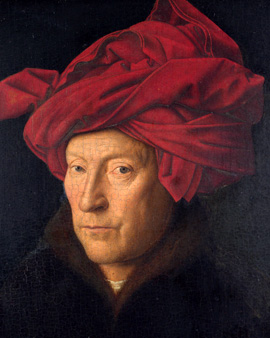
.jpg "Portrait of a Man, Self-Portrait, 1433 by Jan van Eyck")
.jpg)
.jpg "The Ghent Altarpiece. Adoration of the Mystic Lamb, 1432. by Jan van Eyck")
.jpg)
.jpg "The Annunciation Diptych by Jan van Eyck")
.jpg)
.jpg "The Dresden Altarpiece Triptych, 1437 by Jan van Eyck")
.jpg)
.jpg "Saint Barbara by Jan van Eyck")
.jpg)
.jpg "Madonna of Chancellor Rolin, c1435, 1938 by Jan van Eyck")
.jpg)
.jpg "‘The Adoration of the Mystic Lamb’, The Ghent Altarpiece, 1432, c. 1900-1920. by Jan van Eyck")
.jpg)
 c1435 (panel) - (MeisterDrucke-54967).jpg "The Rolin Madonna (The Virgin with Chancellor Rolin), c.1435 by Jan van Eyck")
 c1435 (panel) - (MeisterDrucke-54967).jpg)
.jpg "The Ghent Altarpiece by Jan van Eyck")
.jpg)
.jpg "The Arnolfini Portrait, 1434 by Jan van Eyck")
.jpg)
.jpg "The Ghent Altarpiece. Adoration of the Mystic Lamb: Music-making Angels, 1432. by Jan van Eyck")
.jpg)
.jpg "Arnolfini Marriage, detail of mirror, 1434 by Jan van Eyck")
.jpg)
.jpg "Lucca Madonna by Jan van Eyck")
.jpg)
.jpg "Ghent Altarpiece by Jan van Eyck")
.jpg)
_-_(MeisterDrucke-1583489).jpg "Saint Barbara, c.1427 by Jan van Eyck")
_-_(MeisterDrucke-1583489).jpg)
.jpg "Saint Jerome in his study by Jan van Eyck")
.jpg)
.jpg "The Ghent Altarpiece. Adoration of the Mystic Lamb: The Archangel Gabriel, 1432 by Jan van Eyck")
.jpg)
.jpg "Portrait of Jan de Leeuw by Jan van Eyck")
.jpg)
.jpg "Saint Francis of Assisi Receiving the Stigmata by Jan van Eyck")
.jpg)
.jpg "Portrait of a Man, Self Portrait, 1433 by Jan van Eyck")
.jpg)
.jpg "The Arnolfini Portrait by Jan van Eyck")
.jpg)
.jpg "Portrait of a Man by Jan van Eyck")
.jpg)
.jpg "The Three Marys at the Tomb by Jan van Eyck")
.jpg)
.jpg "The Crucifixion; The Last Judgment, part of a triptych by Jan van Eyck")
.jpg)
_-_(MeisterDrucke-563407).jpg "St. Jerome in his Study by Jan van Eyck")
_-_(MeisterDrucke-563407).jpg)
.jpg "The Three Marys at Christ")
.jpg)
.jpg "Adoration of the Lamb from the Ghent Altarpiece by Jan van Eyck")
.jpg)
.jpg "Madonna and Child at the Fountain by Jan van Eyck")
.jpg)
.jpg "Man Crossing Log Bridge over Torrent by Jan van Eyck")
.jpg)
.jpg "Portrait of a man with a blue chaperon (Man with Ring) by Jan van Eyck")
.jpg)
.jpg "Annunciation after Jan van Eyck, Washington, DC by Jan van Eyck")
.jpg)
.jpg "The Ghent Altarpiece. Adoration of the Mystic Lamb: Joos Vijd and Elisabeth Borluut, 1432 by Jan van Eyck")
.jpg)
_was_Chancellor_of_Burgu_-_(MeisterDrucke-1029948).jpg "The Virgin of Chancellor Rolin. Nicolas Rolin (1376-1461) was Chancellor of Burgundy under Philippe Le Bon and founder of the Hospices de Beaune in 1443. Painting by Jan van Eyck (1390-1441). 15th century. Sun. 0,66x0,62 m Paris by Jan van Eyck")
_was_Chancellor_of_Burgu_-_(MeisterDrucke-1029948).jpg)
.jpg "The Ghent Altarpiece. Adoration of the Mystic Lamb: God Almighty, 1432. by Jan van Eyck")
.jpg)
 detail of the view between the columns c1435 (see also 2993) - (MeisterDrucke-107481).jpg "The Rolin Madonna (The Virgin of Chancellor Rolin), detail of the view between the columns, c. 1435 by Jan van Eyck")
 detail of the view between the columns c1435 (see also 2993) - (MeisterDrucke-107481).jpg)
.jpg "The Ghent Altarpiece. Adoration of the Mystic Lamb: Just Judges and the Knights of Christ, 1432 by Jan van Eyck")
.jpg)
.jpg "The Ghent Altarpiece. Adoration of the Mystic Lamb: Virgin Mary Enthroned, 1432 by Jan van Eyck")
.jpg)
.jpg "Portrait of Giovanni Arnolfini and his Wife by Jan van Eyck")
.jpg)
 detail of Chancellor Nicolas Rolin (1376-1462) c1435 - (MeisterDrucke-114477).jpg "The Rolin Madonna (La Vierge du chancelier Rolin), detail of Chancellor Nicolas Rolin (1376-1462), c. 1435 by Jan van Eyck")
 detail of Chancellor Nicolas Rolin (1376-1462) c1435 - (MeisterDrucke-114477).jpg)
_-_(MeisterDrucke-696616).jpg "The Ghent Altarpiece (open) by Jan van Eyck")
_-_(MeisterDrucke-696616).jpg)
.jpg "The Crucifixion; The Last Judgment by Jan van Eyck")
.jpg)
.jpg "Madonna Surrounded by Saint George, Saint Donatianus of Reims and the Donor Canon Van der Paele by Jan van Eyck")
.jpg)
.jpg "Portrait of a Man by Jan van Eyck")
.jpg)
.jpg "The marriage of Philip the Good to Isabella of Portugal in January 1430 by Jan van Eyck")
.jpg)
.jpg "The Lucca Madonna by Jan van Eyck")
.jpg)
.jpg "Detail from the Virgin and Child with Saints Donatian and George and Canon Joris van der Paele, c.1436 by Jan van Eyck")
.jpg)
.jpg "Portrait of Margaret van Eyck, 1927 by Jan van Eyck")
.jpg)
 1434 (detail of 1765) - (MeisterDrucke-60506).jpg "The Portrait of Giovanni Arnolfini and his Wife Giovanna Cenami (The Arnolfini Marriage), 1434 (detail of 1765) by Jan van Eyck")
 1434 (detail of 1765) - (MeisterDrucke-60506).jpg)
.jpg "The Fountain of Life by Jan van Eyck")
.jpg)
.jpg "The Ghent Altarpiece. Adoration of the Mystic Lamb: John the Baptist and John the Evangelist, 1432 by Jan van Eyck")
.jpg)
.jpg "Lucca Madonna by Jan van Eyck")
.jpg)
.jpg "Portrait of Jan De Leeuw by Jan van Eyck")
.jpg)
.jpg "The Annunciation by Jan van Eyck")
.jpg)
.jpg "Man with Pinks by Jan van Eyck")
.jpg)
 c1435 (panel) (detail of 2993) - (MeisterDrucke-88520).jpg "The Rolin Madonna (The Virgin of Chancellor Rolin), c. 1435 (detail of 2993) by Jan van Eyck")
 c1435 (panel) (detail of 2993) - (MeisterDrucke-88520).jpg)
 - (MeisterDrucke-57932).jpg "Portrait of a Young Man, 1432 by Jan van Eyck")
 - (MeisterDrucke-57932).jpg)
.jpg "The Portrait of Giovanni Arnolfini and His Wife Giovanna Cenami - The Arnolfini Marriage, 1434, detail of 1765 by Jan van Eyck")
.jpg)
.jpg "Portrait of a Man by Jan van Eyck")
.jpg)
.jpg "Lucca Madonna by Jan van Eyck")
.jpg)
.jpg "Cardinal Niccolo Albergati, Papal envoy in the Spanish Netherlands by Jan van Eyck")
.jpg)
.jpg "Virgin and Child, with Saints and Donor by Jan van Eyck")
.jpg)
.jpg "Portrait of a Man with a Red Chaperon by Jan van Eyck")
.jpg)
.jpg "The Arnolfini Portrait, 1434, 1904 by Jan van Eyck")
.jpg)
.jpg "A Young Man holding a Ring, c. 1450 by Jan van Eyck")
.jpg)
.jpg "Calvary by Jan van Eyck")
.jpg)
.jpg "The Crucifixion, The Last Judgment, ca. 1440-41 by Jan van Eyck")
.jpg)
.jpg "The Madonna with Canon van der Paele, 1436 by Jan van Eyck")
.jpg)
.jpg "The Ghent Altarpiece. Adoration of the Mystic Lamb: Adam and Eve, 1432 by Jan van Eyck")
.jpg)
_-_(MeisterDrucke-1586985).jpg "Jan de Leeuw, goldsmith by Jan van Eyck")
_-_(MeisterDrucke-1586985).jpg)
.jpg "Baudouin de Lannoy by Jan van Eyck")
.jpg)
.jpg "Portrait of Marco Barbarigo, c.1449-50 by Jan van Eyck")
.jpg)
.jpg "The Annunciation by Jan van Eyck")
.jpg)
.jpg "Marco Barbarigo, c. 1450 by Jan van Eyck")
.jpg)
.jpg "The Ghent Altarpiece by Jan van Eyck")
.jpg)
.jpg "Lucca Madonna by Jan van Eyck")
.jpg)
.jpg "Man in a Blue Cap by Jan van Eyck")
.jpg)
.jpg "Madonna Adored by the Canonicus Van der Paele by Jan van Eyck")
.jpg)
.jpg "The Adoration of the Lamb by Jan van Eyck")
.jpg)
.jpg "Adoration of the Lamb by Jan van Eyck")
.jpg)
.jpg "Portrait of Margareta van Eyck by Jan van Eyck")
.jpg)
.jpg "The Virgin of Chancellor Rolin by Jan van Eyck")
.jpg)
.jpg "Baudouin de Lannoy by Jan van Eyck")
.jpg)
.jpg "The Virgin of Chancellor Rolin by Jan van Eyck")
.jpg)
_-_(MeisterDrucke-1663651).jpg "Annunciation by Jan van Eyck")
_-_(MeisterDrucke-1663651).jpg)
.jpg "Portrait of a Man by Jan van Eyck")
.jpg)
.jpg "The Arnolfini Portrait by Jan van Eyck")
.jpg)
.jpg "The Madonna in the Church by Jan van Eyck")
.jpg)
.jpg "The Knights of Christ and The Just Judges by Jan van Eyck")
.jpg)
.jpg "The Ghent Altarpiece. Adoration of the Mystic Lamb: John the Baptist (1432) by Jan van Eyck")
.jpg)
.jpg "The Crucifixion; The Last Judgment, diptych by Jan van Eyck")
.jpg)
.jpg "Saint Francis of Assisi Receiving the Stigmata, ca 1430 by Jan van Eyck")
.jpg)
.jpg "Lucca Madonna by Jan van Eyck")
.jpg)
_Um_1429_-_(MeisterDrucke-804800).jpg "Portrait of a Man with a Blue Chaperon (Man with the Ring). Around 1429 by Jan van Eyck")
_Um_1429_-_(MeisterDrucke-804800).jpg)
_(detail)_-_(MeisterDrucke-1438555).jpg "Portrait of Christ (detail) by Jan van Eyck")
_(detail)_-_(MeisterDrucke-1438555).jpg)
.jpg "Portrait of a Man by Jan van Eyck")
.jpg)
.jpg "Portrait of Margareta van Eyck by Jan van Eyck")
.jpg)
.jpg "Madonna of Chancellor Rolin by Jan van Eyck")
.jpg)

 +43 4257 29415
 support@meisterdrucke.com
 Mo-Do: 7:00 - 16:00 | Fr: 7:00 - 13:00