What does the "Israeli signature" in painting actually look like Is there even such a thing as a typical style in a country that is permeated by so many cultures, languages and histories Anyone who embarks on a search for Israel's art history will not discover a uniform image, but rather a fascinating mosaic of colours, forms and desires - a kaleidoscope that is constantly being reassembled. Israel's artistic dynamics are characterised by a constant movement between tradition and new beginnings, between desert and metropolis, between memory and vision.
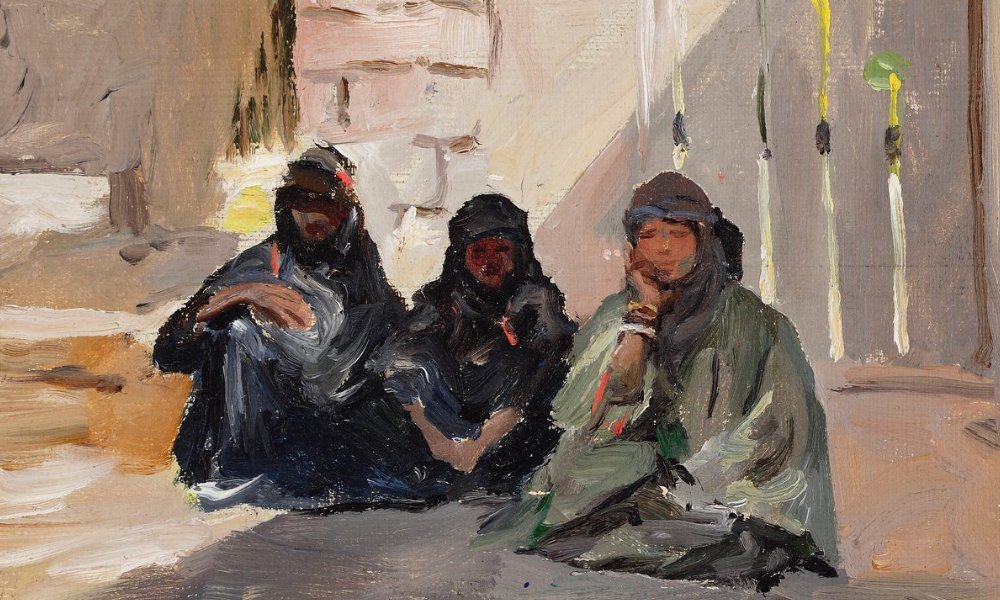
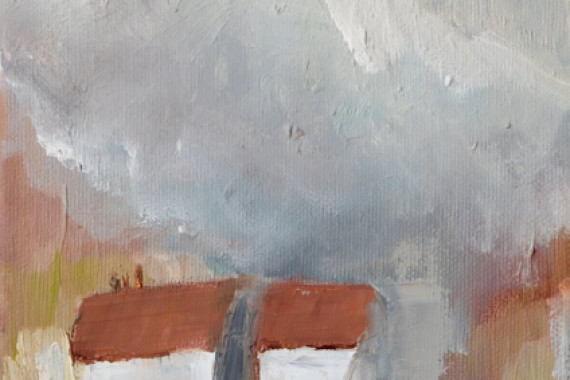
Imagine you are standing in front of a painting by Reuven Rubin: palm trees swaying in the wind, the hills of the Galilee glowing in soft pastel colours, and somewhere on the horizon the sky and earth merge into a vibrant line. Rubin's works are more than landscapes - they are spaces of longing in which the light of the Orient meets the melancholy of Eastern European origins. This mixture of the familiar and the foreign runs like a common thread through Israeli art. Artists such as Nachum Gutman and Anna Ticho used watercolour and ink to capture the light of Jerusalem, which dances on the stones and casts shadows as if to tell stories. Their sketches and drawings are often snapshots of a country in transition, full of tenderness and at the same time driven by an almost archaeological curiosity.
Yet Israel's art is not only inspired by the landscape, but also by social upheavals. In the 1970s, for example, when political tensions and social issues were shaking the country, artists such as Moshe Gershuni and Raffi Lavie turned to new forms of expression: They experimented with collage, mixed media, photography and printmaking to visualise the discord and polyphony of Israeli society. Lavie's seemingly casual scribbles on plywood panels, his combination of newspaper cuttings, splashes of colour and lettering, are like visual diaries of a country that is constantly reinventing itself. Gershuni, on the other hand, brought an emotional depth into play with expressive gouaches and prints that oscillate between pain, protest and hope.
What is surprising is the extent to which Israeli art repeatedly crosses borders - not only geographically, but also stylistically. The works of Michal Rovner and Adi Nes, for example, feature photographic stagings that play with myths and identities, with light and shadow, with the visible and the hidden. Rovner's minimalist, almost abstract photographs of people in motion are reminiscent of archaic murals, while Nes brings biblical motifs into the present with his staged photographs and poses questions about masculinity, belonging and vulnerability.
Israel's art history is a living archive of longing, searching and new beginnings. It is characterised by artists who are constantly searching for new ways to make the unspeakable visible with a brush, camera or etching needle. Anyone who engages with these images will sense the shimmering heat, the murmur of history and the quiet hope that art can build bridges - between people, times and worlds.
What does the "Israeli signature" in painting actually look like Is there even such a thing as a typical style in a country that is permeated by so many cultures, languages and histories Anyone who embarks on a search for Israel's art history will not discover a uniform image, but rather a fascinating mosaic of colours, forms and desires - a kaleidoscope that is constantly being reassembled. Israel's artistic dynamics are characterised by a constant movement between tradition and new beginnings, between desert and metropolis, between memory and vision.
Imagine you are standing in front of a painting by Reuven Rubin: palm trees swaying in the wind, the hills of the Galilee glowing in soft pastel colours, and somewhere on the horizon the sky and earth merge into a vibrant line. Rubin's works are more than landscapes - they are spaces of longing in which the light of the Orient meets the melancholy of Eastern European origins. This mixture of the familiar and the foreign runs like a common thread through Israeli art. Artists such as Nachum Gutman and Anna Ticho used watercolour and ink to capture the light of Jerusalem, which dances on the stones and casts shadows as if to tell stories. Their sketches and drawings are often snapshots of a country in transition, full of tenderness and at the same time driven by an almost archaeological curiosity.
Yet Israel's art is not only inspired by the landscape, but also by social upheavals. In the 1970s, for example, when political tensions and social issues were shaking the country, artists such as Moshe Gershuni and Raffi Lavie turned to new forms of expression: They experimented with collage, mixed media, photography and printmaking to visualise the discord and polyphony of Israeli society. Lavie's seemingly casual scribbles on plywood panels, his combination of newspaper cuttings, splashes of colour and lettering, are like visual diaries of a country that is constantly reinventing itself. Gershuni, on the other hand, brought an emotional depth into play with expressive gouaches and prints that oscillate between pain, protest and hope.
What is surprising is the extent to which Israeli art repeatedly crosses borders - not only geographically, but also stylistically. The works of Michal Rovner and Adi Nes, for example, feature photographic stagings that play with myths and identities, with light and shadow, with the visible and the hidden. Rovner's minimalist, almost abstract photographs of people in motion are reminiscent of archaic murals, while Nes brings biblical motifs into the present with his staged photographs and poses questions about masculinity, belonging and vulnerability.
Israel's art history is a living archive of longing, searching and new beginnings. It is characterised by artists who are constantly searching for new ways to make the unspeakable visible with a brush, camera or etching needle. Anyone who engages with these images will sense the shimmering heat, the murmur of history and the quiet hope that art can build bridges - between people, times and worlds.
 ×
× 





 Passionate Customer Service


 +43 4257 29415
 support@meisterdrucke.com
 Mo-Do: 7:00 - 16:00 | Fr: 7:00 - 13:00