-
 ×
× - Home
- Art Prints ▸
- Artists ▸
- Categories ▸
- Art Styles ▸
- Picture Frame ▸
- All decorative frames
- Baroque decorative frames
- Simple decorative frames
- Rustic decorative frames
- Floating frames
- Golden decorative frames
- Silver decorative frames
- White decorative frames
- Black decorative frames
- Wood-look decorative frames
- Shabby chic decorative frames
- Thin decorative frames
- Thick decorative frames
- Print Media ▸
- All print media
- Canvas Leonardo (satin)
- Canvas Salvador (matte)
- Canvas Raphael (matte)
- FineArt Photo Matte
- FineArt Photo Satin
- FineArt Photo Baryte
- FineArt Photo Glossy
- Watercolor Paper Munch
- Watercolor Paper Renoir
- Watercolor Paper Turner
- Watercolor Paper Dürer
- Natural Line Hemp
- Natural Line Rice
- Kozo White, 110g
- Kozo Natural, 110g
- Inbe White, 125g
- Unryu, 55g
- Bamboo, 110g
- Premio Unryu, 165g
- Murakumo Natural, 42g
- Bizan Natural, 300g
- Bizan White, 300g
- Aluminum composite 3mm
- Acrylic glass 5mm
- Order Sample Set
- Which print medium is right for you?
Canvas
Photo Paper
Watercolor Board
Natural Line
Japanese Paper
Special Media
More information
- Help & Service ▸
- Contact us
- Sell your art
- Frequently Asked Questions
- Job Openings
- Complaint
- Order Samples
- Order Vouchers
- Shipping costs
- Production time
- Sustainability
- Image research
- Special requests
- Who are we?
- Pricing policy
- Company policy
- Quality promise
- Awards
- Stretcher frame
- Mats
- Decorative frames
- Glazing
- Fillets
- Mounting systems
- Print media
- Care tips
- Legal Notice
- Terms & Conditions
- Privacy Policy
- Right of Cancellation
Info & Service
More information
Good to know
Legal information
- Shop ▸
- Contact




 View in 3D / AR
 Add to favorites
 Change wall color
 View picture in a room
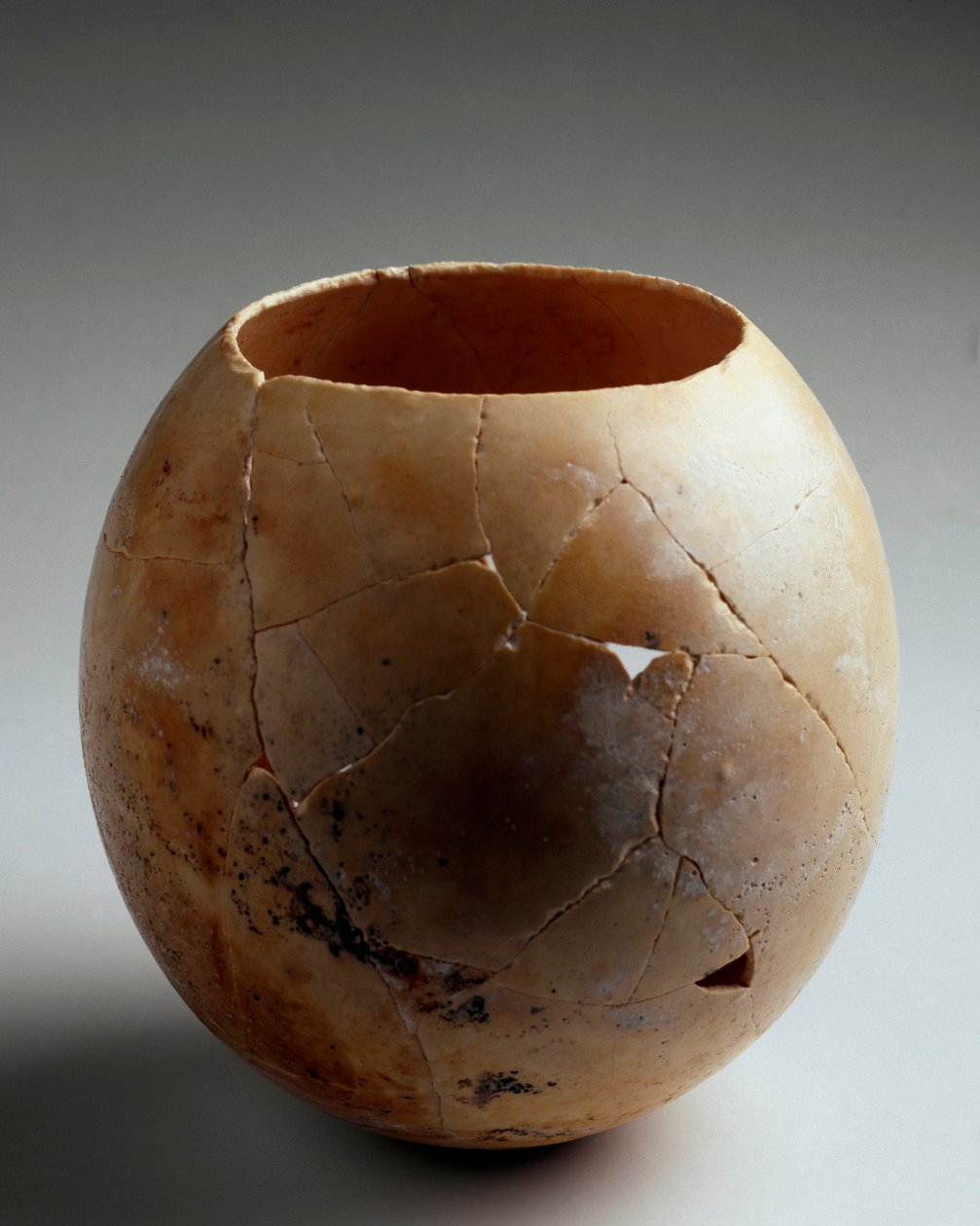
 - (MeisterDrucke-154573).jpg "Engobe vase decorated with undulating lines, Tene III")
.jpg "Prehistory: terracotta vase with square opening of the Neolithic age from the Caverna Delle Arene in Candide (Liguria)")
.jpg "Vase")
_-_(MeisterDrucke-426941).jpg "Armorican biconical jar with four handles")
.jpg "Terracotta Vase with Square Opening from the Neolithic Age")
 - (MeisterDrucke-415843).jpg "Rudimentary Bowl, from Nineveh")
.jpg "Prehistory, Remedello culture: bell-shaped vase from the Santa Cristina cave, Fiesse near Brescia. Copper Age. Eneolithic. 2200 BC. Rome, Museo Nazionale Preistorico Etnografico Luigi Pigorini")
 - (MeisterDrucke-312163).jpg "Cycladic kandila, Grotta-Pelos Culture")
_terracotta_vase_from_the_necropo_-_(MeisterDrucke-1000479).jpg "Prehistory, Rinaldone culture (Montefiascone): terracotta vase from the necropolis of Rinaldone. Copper Age. Eneolithic. 2200 BC. Rome, Museo Nazionale Preistorico Etnografico Luigi Pigorini")
 - (MeisterDrucke-199725).jpg "Vase")
_(see_also_3_-_(MeisterDrucke-390376).jpg "Bell beaker from a grave at Radley, Barrow Hills, c.2500-2150 BC")
_-_(MeisterDrucke-1034614).jpg "Prehistory: vase in the shape of a bell. Neolithic")
.jpg "White Marble Vase with Ochre Incrustations. Cycladic Civilization (3200-2000 BC)")
.jpg "Terracotta Pot, Kalibangan, 2300-1750 BC")
.jpg "Prehistory, Remedello culture: bell-shaped vase from the Santa Cristina cave, Fiesse near Brescia. Copper Age. Eneolithic. 2200 BC. Rome, Museo Nazionale Preistorico Etnografico Luigi Pigorini")
.jpg "Vase with Decorative Carving, from Tell-Hassuna, 5th Millennium BC")
.jpg "Prehistory: clay vase with geometric decorations of Anau type from the site of Gheoksjur (South Turkmenistan). 4000-3500 BC Eneolithic, Copper Age. Saint Petersburg, Hermitage Museum, Russia")
.jpg "Prehistory: terracotta vase with square opening of the Neolithic age from the Caverna Delle Arene in Candide (Liguria)")
.jpg "Copper vase, Harappa, 2300-1750 BC")
.jpg "Prehistory: terracotta vase from the necropolis of Caolino al Sasso di Furbara, Lazio. Stone Age. Neolithic. Rome, Museo Nazionale Preistorico Etnografico Luigi Pigorini")
_-_(MeisterDrucke-1016393).jpg "Prehistory: ceramic vase, Neolithic. Coming from Cacín")
 - (MeisterDrucke-308097).jpg "Eyed bowl")
 - (MeisterDrucke-375337).jpg "Red slipped pottery jar, New Kingdom")
.jpg "French wine amphora with painted inscription on the neck, from the Roman site at Newstead, Melrose")
.jpg "Prehistory: terracotta vase with square opening of the Neolithic age from the Caverna Della Pollera (Liguria). Pegli, Museo Villa Pallavicini")
_Rome_Nation_-_(MeisterDrucke-954485).jpg "Terracotta jar from the Jomon period (period of prehistory in Japan). Rome, National Museum of Oriental Art.")
.jpg "Prehistory, Iberic Civilization: Dentee Funerary Urn of the Iron Age. From Galera (Granada)")
.jpg "Black-Topped Beaker, 4500-3000 BC")
 - (MeisterDrucke-181868).jpg "Jar, Early Dynasty")
.jpg "Phoenician art: representation of the deity Astarte. Bronze sculpture from the 7th century BC. From the shrine of Carambolo in Spain. Dimensions: 16 cm. Seville, Archaeological Museum")
.jpg "Detail of the Ship Sarcophagus, from Sidonian stone")
.jpg "Phoenician art: terracotta statuette representing the deity Tanit. 3rd-2nd century BC. Madrid, National Archaeological Museum.")
 3rd millennium BC (terracotta) - (MeisterDrucke-193843).jpg "Plaque depicting a winged goddess, possibly Ishtar, standing on two ibexes, from Ras Shamra (Ugarit), 3rd millennium BC")
 - (MeisterDrucke-215953).jpg "Idol of the god Baal, from Ugarit, Syria")
 - (MeisterDrucke-162683).jpg "Victory stele for King Mesha of Moab at Dibon, Eastern Jordan, 842 BC")
.jpg "Phoenician art: terracotta statuette representing the goddess Tanit, pierced ears and nose. 3rd-2nd century BC. Madrid, Museo Arqueológico Nacional")
.jpg "Detail of the inscription from the sarcophagus of Eshmunazar recounting how he and his mother Amashtarte, servant of Astarte, built temples to the gods of Sidon, basalt")
.jpg "Statuette of a Phoenician goddess, from the Phoenician coast, c. 700-600 BC")
.jpg "Phoenician civilization: bed ornament decorated with an ivory bas-relief representing a guard presenting a lion to the king. From the site of Ugarit, an ancient Syrian city on Tell Ras Shamra. 14th century BC. Dimensions 24 cm. Damascus, National Museum")
.jpg "Phoenician art: two gold statuettes, on the left the goddess Ishtar (Inanna or Astarte) on a plate, on the right a fertility goddess with raised arms, from the site of Tink El Beida, Syria. 15th century-12th century BC. Paris, Louvre Museum")
.jpg "Phoenician art: carved ivory pyxis cover, representing a Mycenaean fertility goddess nursing goats. Around 1250 BC. From Twink El Beida. Dimensions: 13 cm. Paris, Louvre Museum")
_-_(MeisterDrucke-999995).jpg "Phoenicia: bronze figurine of a god. Found in the sea near Selinunte (Selinonte), Sicily. 14th-13th century BC. Palermo, Museo Archeologico Nazionale")
.jpg "Pectoral Ornament with Ends in the Form of Falcon Heads and Decorated with a Falcon Bearing Two Palm Trees, from the Tomb of King Ip Abi Shemu at Byblos, c. 1800-1700 BC")
.jpg "Phoenician Art: Gold Platter Decorates Royal Hunting Scene")
.jpg "The Moret Bridge in the Summer, 1888")
.jpg "The North Cape by Moonlight, 1848")
.jpg "Kneeling Woman in an Orange-Red Dress")
.jpg "Suigin Grove and Masaki, on the Sumida River, from")
.jpg "Summer Afternoon, 1865")
.jpg "Mending the Sail, 1896")
 Empress of Austria wife of Emperor Franz Joseph of Austria (1830-1916) - (MeisterDrucke-40226).jpg "Elizabeth of Bavaria (1837-98), Empress of Austria, wife of Emperor Franz Joseph of Austria (1830-1916)")
.jpg "The Redoutable at Trafalgar, 21st October 1805")
 - (MeisterDrucke-195522).jpg "Angel Traveller")
.jpg "Vesuvius in Eruption")
.jpg "Thalia, the Muse of Comedy, 1897")
.jpg "Fishing Boats on the Beach at Les Saintes-Maries-de-la-Mer")
.jpg "Blooming Chestnut Tree")
.jpg "A Gotthelf reader")
.jpg "Whirl of Love, c. 1917.")

 +43 4257 29415
 support@meisterdrucke.com
 Mo-Do: 7:00 - 16:00 | Fr: 7:00 - 13:00